
प्रस्तावना ( Introdution)
Quality Content क्या है और इसके मुख्य प्रकार
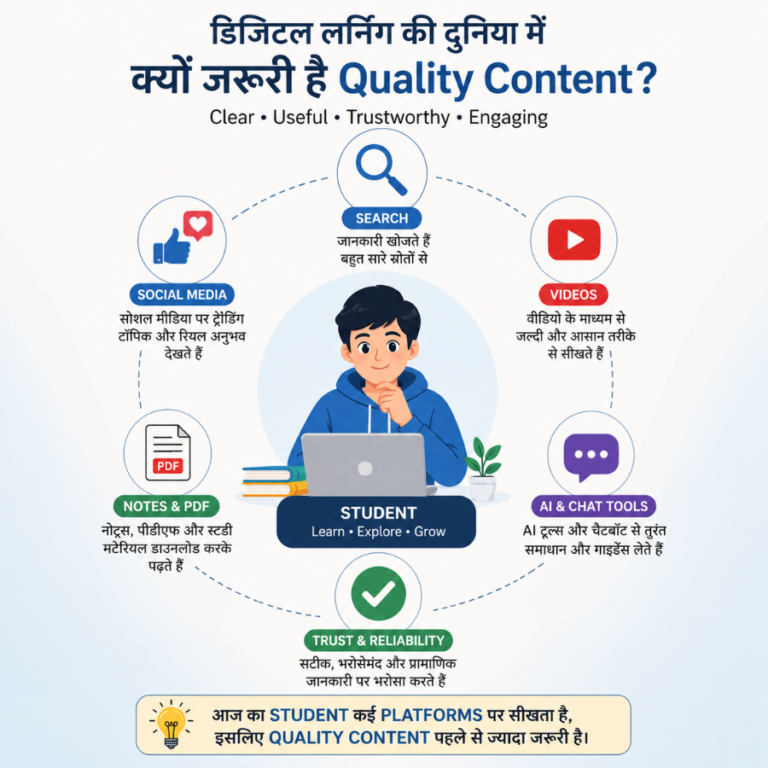
आज का छात्र सिर्फ textbook reader नहीं रहा; वह search results, video explainers, social posts, notes PDFs, और AI summaries के बीच सीखता है। भारत में 2025 की शुरुआत तक 806 million internet users और 491 million social media user identities दर्ज की गईं है । HubSpot रिपोर्ट 2026 कहती है कि marketing outlook में यह रेखांकित किया गया है कि AI content से market भर रहा है, इसलिए growth अब distinctiveness, trust और relevance पर ज्यादा depend करती है। इसका सीधा अर्थ है कि online दुनिया में सिर्फ content publish करना काफी नहीं, बल्कि Quality Content publish करना जरूरी है।
युवा audience का attention landscape भी multi-platform है। Pew Research Center के 2024 teen survey में 9 in 10 teens ने YouTube use करने की बात कही, जबकि लगभग 6 -in-10 teens ने TikTok और Instagram use करने की जानकारी दी। दूसरी ओर HubSpot के 2026 data roundup के अनुसार short-form video वह media format है जिसमें marketers सबसे ज्यादा invest करने की planning कर रहे हैं। यानी आपका message अब सिर्फ text से नहीं, बल्कि video, visual, social और search—हर format में पूरा करता है।
इसीलिए Quality Content केवल bloggers या brands का विषय नहीं है। यह students के लिए भी एक core digital skill है—चाहे आप exam notes लिख रहे हों, अपना personal blog बना रहे हों, academic concept समझा रहे हों, या अपने knowledge-based profile को मजबूत कर रहे हों। Helpful, original और trustworthy content आपकी learning को भी गहरा करता है और आपकी digital identity को भी मजबूत बनाता है।
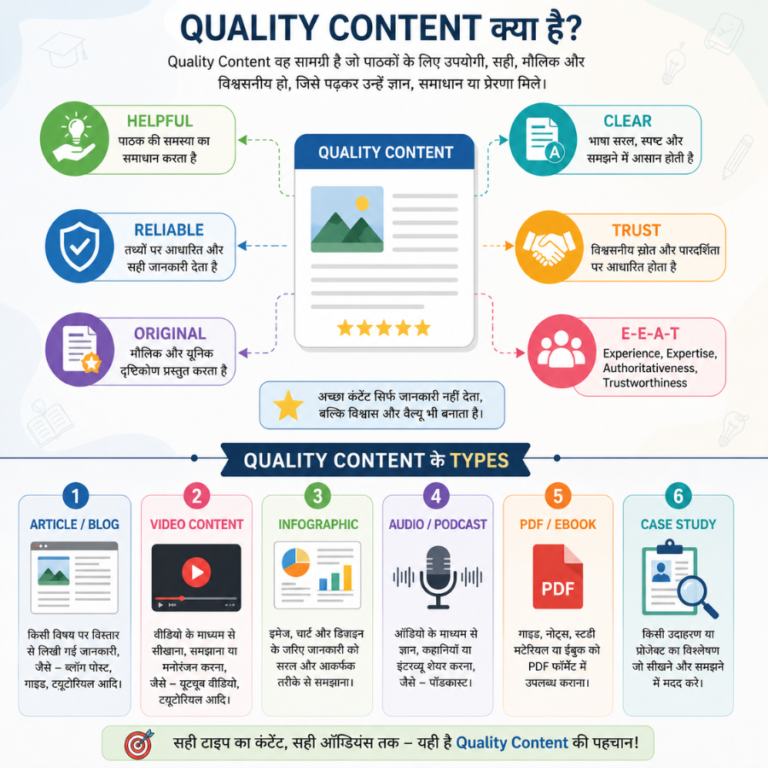
सरल शब्दों में, Quality Content वह content है जो लोगों की मदद करने के लिए बनाया गया हो, search engine को manipulate करने के लिए नहीं। Google के official Search guidance के अनुसार strong content helpful, reliable और people-first होना चाहिए। उसी guidance में E-E-A-T—यानी experience, expertise, authoritativeness और trustworthiness—का उल्लेख है, और इनमें trust को सबसे महत्वपूर्ण बताया गया है। इसका मतलब यह है कि अच्छा content सिर्फ जानकारी नहीं देता; वह भरोसा भी पैदा करता है।
दूसरे शब्दों में, Quality Content केवल लंबे article का नाम नहीं है। अगर content में बार-बार keyword ठूंसे गए हों, कई topics पर बिना depth के लिखा गया हो, केवल दूसरों की बात summarize की गई हो, या सिर्फ word count पूरा करने के लिए लिखा गया हो, तो वह strong content नहीं माना जाता। Google साफ कहता है कि उसका कोई preferred word count नहीं है, और excessive repetition keyword stuffing मानी जा सकती है।
Format की बात करें तो Search systems web pages, images, videos और दूसरे public materials को समझते हैं। साथ ही, Content Marketing Institute के 2025 benchmarks में video, thought leadership, webinars और audio में बढ़ते investment दिखे, जबकि HubSpot के 2026 data में short-form video top priority media format रहा। इसलिए आज के दौर में Quality Content केवल blog post नहीं, बल्कि एक multi-format asset है।
Student-friendly मुख्य Content types
मुख्य content types को student-friendly अंदाज़ में ऐसे समझा जा सकता है:
- Blog Article या Guide — जैसे “Exam में Answer Writing कैसे Improve करें” वाला detailed post।
- Short-form Video या Reel — 30 से 60 सेकंड का quick tip, जैसे “3 revision hacks before exam.”
- Long-form Video या Webinar — किसी concept का deep explanation, जैसे “Organic Chemistry in one session.”
- Infographic या Carousel — visual summary, जैसे “7 mistakes students make while note-making.”
- Podcast या Audio Note — commute या walk के दौरान सुनने लायक concept recap।
- eBook, PDF Notes, Checklist — downloadable resource, जैसे “30-day study tracker.”
- Case Study, Review या Portfolio Content — जैसे “मैंने अपना semester project कैसे plan किया” या “यह study method मेरे लिए क्यों काम किया।”
मान लीजिए topic है: How to Improve Study Notes। यही एक idea article में detailed guide बन सकता है, reel में 30-second hack बन सकता है, carousel में 5-step method बन सकता है, और PDF checklist में daily revision tool बन सकता है। विषय एक, format कई हो सकते है। —यही smart content strategy है। लेकिन हर format में quality का मूल नियम वही रहता है: useful, clear, relevant, trustworthy।
आज के दौर में Quality Content क्यों जरूरी है ?
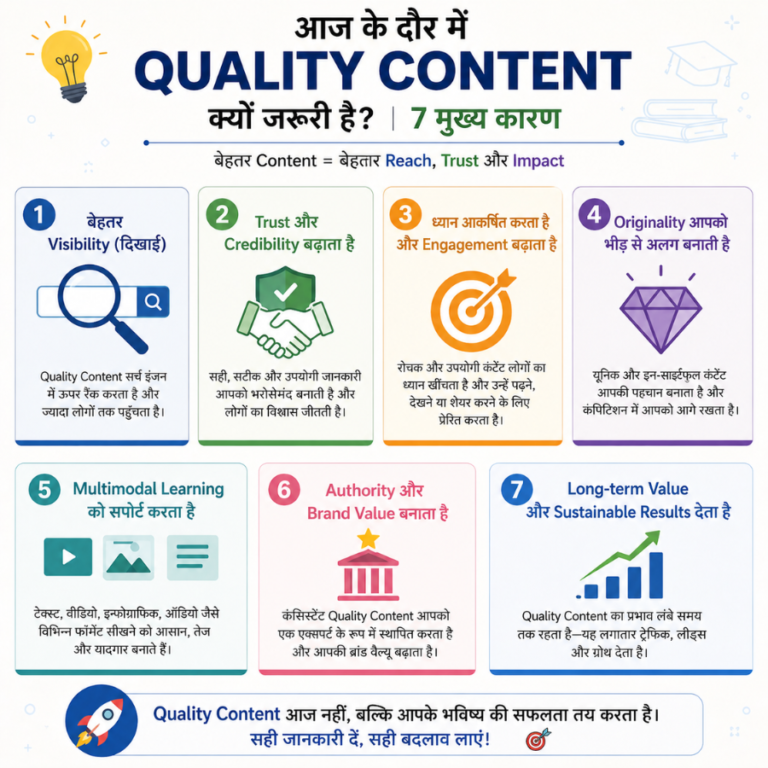
आज के digital environment में Quality Content luxury नहीं, necessity है। नीचे इसके 7 बड़े कारण दिए जा रहे हैं।
- Search visibility बढ़ाने के लिए Quality Content जरूरी है। Google की ranking systems helpful और reliable information को prioritize करने की कोशिश करती हैं, और Search Essentials follow करने वाली content properties के Search में दिखाई देने की संभावना अधिक होती है। इसलिए अगर आपका content किसी real problem का solution देता है, तो उसकी discoverability search-engine-first pages की तुलना में बेहतर हो सकती है। उदाहरण के लिए, “semester exam के लिए realistic 7-day study plan” जैसा article अक्सर generic motivational post से अधिक useful resource बनता है।
- Misinformation के दौर में trust सबसे बड़ी currency बन चुका है। Google की Own guidance में trust को E-E-A-T का सबसे critical part कहा गया है। दूसरी ओर Edelman के 2025 Trust Barometer में misleading और false information को रोकना तथा trustworthy information उपलब्ध कराना एक प्रमुख सामाजिक आवश्यकता के रूप में सामने आता है। इसलिए scholarship, health, finance, career, या exam strategy जैसे topics पर low-quality content सिर्फ weak नहीं होता; वह reader के decision को भी खराब कर सकता है।
- युवा audience का attention fragmented है, इसलिए content को first impression में value देना पड़ता है। Pew के teen-platform data और India के large-scale internet usage numbers यह दिखाते हैं कि digital consumption व्यापक है और competition बहुत ज्यादा है। इसी कारण web writing और content presentation में clarity तथा fast comprehension की value बढ़ जाती है। अगर शुरुआती lines weak, vague या boring हों, तो user आगे नहीं बढ़ेगा।
- AI content flood के बीच originality ही आपकी edge है। Google के 2025 AI-search guidance के अनुसार AI experiences में भी unique, non-commodity, helpful content जरूरी है। HubSpot की 2026 report भी कहती है कि AI से भरे market में growth distinctiveness, trust और relevance से driven होती है। इसका व्यावहारिक अर्थ यह है कि generic rewrite, copy summary, या बिना perspective वाला content अब जल्दी differentiate नहीं होता; आपका original angle, real example, tested framework और clear voice ही जीतते हैं।
- Search अब multimodal हो चुका है। Google खुद कहता है कि Search visual, video, news और multimodal needs को serve करने के लिए evolve हुआ है, और 2025 guidance में text के साथ high-quality images और videos जोड़ने की सलाह दी गई है। इसका मतलब यह है कि आज का effective content केवल “लेख” नहीं, बल्कि “experience” है। अगर आप सिर्फ dense text लिखते हैं और visual explanation नहीं देते, तो आप comprehension और discoverability दोनों opportunities खो सकते हैं।
- Quality Content personal brand और authority build करता है। Google की “Who, How, Why” guidance कहती है कि reader को यह स्पष्ट दिखना चाहिए कि content किसने बनाया, कैसे बनाया, और क्यों बनाया। Byline, author background, examples, process transparency और evidence—ये सब trust signals बनते हैं। Students के लिए यही principle project write-up, niche study blog, concept explainer page या educational social profile को “serious resource” में बदल सकता है।
- Quality Content long-term value देता है, सिर्फ short-term traffic नहीं। Good titles, relevant snippets, descriptive links और satisfying reading experience किसी page को लंबे समय तक useful asset बनाए रख सकते हैं। Google की AI-search guidance यह भी कहती है कि AI Overviews से आने वाले clicks higher quality हो सकते हैं, जहां users site पर अधिक समय बिताते हैं। मतलब strong content अक्सर केवल visibility नहीं, better engagement भी ला सकता है।
Quality Content बनाते समय किन मुख्य 07 बातों का ध्यान रखें
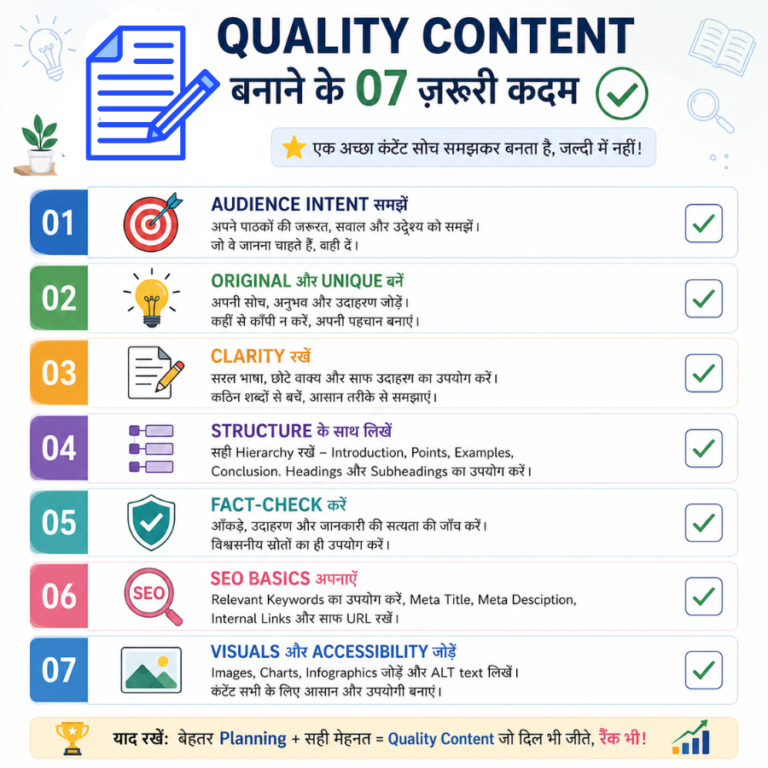
Quality Content किस्मत से नहीं बनता; यह audience understanding, clarity, structure और trust का परिणाम होता है। और यहां एक myth तोड़ना जरूरी है: लंबाई helpful हो सकती है, लेकिन केवल इसीलिए लम्बा लेख लिखना कि Google को long content पसंद है, सही सोच नहीं है। Google साफ कहता है कि उसका preferred word count नहीं होता। इसलिए long-form तभी लिखें जब हर section value add करे। Quality Content बनाते समय निम्न मुख्य बातों का ध्यान रखना जरुरी है :-
- Audience intent पहले समझिए:- सबसे पहले यह तय करें कि आपका reader कौन है, उसका knowledge level क्या है, और वह किस सवाल का जवाब चाहता है। Google के people-first self-checks intended audience और usefulness पर जोर देते हैं, जबकि plain-language guidance reader-first writing की सलाह देती है। इसलिए “Study Tips” जैसा broad topic छोड़कर “B.Sc. first year students के लिए Physics practical file कैसे तैयार करें” जैसा specific topic कहीं ज्यादा effective होगा।
- Originality और first-hand value जोड़िए:- Quality Content में कुछ ऐसा होना चाहिए जिसे copy-paste करके आसानी से reproduce न किया जा सके—जैसे आपका tested method, screenshots, real experience, mistakes-to-avoid, framework, comparison, templates, या sample answer। Google first-hand expertise पर जोर देता है और सिर्फ दूसरों की बात summarize करने के खिलाफ चेतावनी देता है। इसलिए अगर आप note-making पर article लिख रहे हैं, तो अपने वास्तविक note layout की image, color-code strategy और revision cycle भी बताइए।
- भाषा सरल, clear और active रखें:- Official plain-language guidance लेखन को स्पष्ट, संक्षिप्त, व्यवस्थित और पाठकों / दर्शकों के लिए उपयुक्त रखने की सलाह देती है। छोटे वाक्य, सक्रिय आवाज, रोजमर्रा के शब्दों की समझ को आसान बनाते हैं; Digital.gov भी active voice को अस्पष्टता कम करने वाला बताता है। Student audience के लिए यह approach विशेष रूप से महत्वपूर्ण है, क्योंकि भारी शब्दजाल सामग्री अक्सर विद्वत्तापूर्ण दिखता है, पर प्रयोग करने योग्य नहीं होता।
- Structure को scan-friendly बनाइए:- Nielsen Norman Group की studies बताती हैं कि web users अक्सर content को पढ़ते कम, scan ज्यादा हैं। उसी research में concise, scannable और objective writing measured usability को मजबूत करती दिखी, और eyetracking evidence कई scanning patterns को पहचानता है। इसलिए intro में main promise जल्दी दीजिए, subheadings meaningful रखिए, paragraphs छोटे रखिए, lists और highlights का उपयोग कीजिए, और हर section से एक clear takeaway दीजिए।
- Accuracy, sourcing और transparency को non-negotiable मानिए:- Google की “Who, How, Why” guidance byline, author background, production process और evidence की ओर संकेत करती है। AI-assisted content के मामले में भी Google कहता है कि evaluation important है—मतलब tool नहीं, final value matter करती है। इसलिए data cross-check कीजिए, dates verify कीजिए, claims fact-check कीजिए, और जहां जरूरी हो source-based information दीजिए। अगर content AI-assisted है, तो human review, editing और verification जरूर कीजिए।
- SEO basics अपनाइए, keyword stuffing नहीं:- Google title links के लिए clear, concise, page-specific titles की सलाह देता है; meta descriptions short, relevant, unique “pitch” जैसी होनी चाहिए; anchor text descriptive, concise और relevant होना चाहिए। Google यह भी स्पष्ट कहता है कि meta keywords tag उपयोगी नहीं है, और excessive repetition keyword stuffing उसकी spam policies के खिलाफ है। इसलिए focus keyword को title, intro, 1-2 relevant headings, image caption/alt, और conclusion में natural तरीके से रखिए—repeat करके नहीं, context बनाकर। अगर आपकी website है, तो relevant internal links भी context के साथ जोड़िए।
- Visuals और accessibility को content quality का हिस्सा मानिए:- Google के image SEO guidance के अनुसार high-quality images को relevant text के पास रखना चाहिए, captions और titles helpful होने चाहिए, filenames short but descriptive होने चाहिए, और alt text image और page relationship को explain करना चाहिए। W3C की accessibility guidance यह भी कहती है कि alt text image के purpose और information को convey करे। यानी image decoration नहीं, explanation tool है। अगर infographic “7 benefits of Quality Content” दिखा रहा है, तो ALT text में सिर्फ “infographic” लिखना पर्याप्त नहीं; उसमें image का meaning भी आना चाहिए।
Quality Content बनाने के मुख्य 07 फायदे
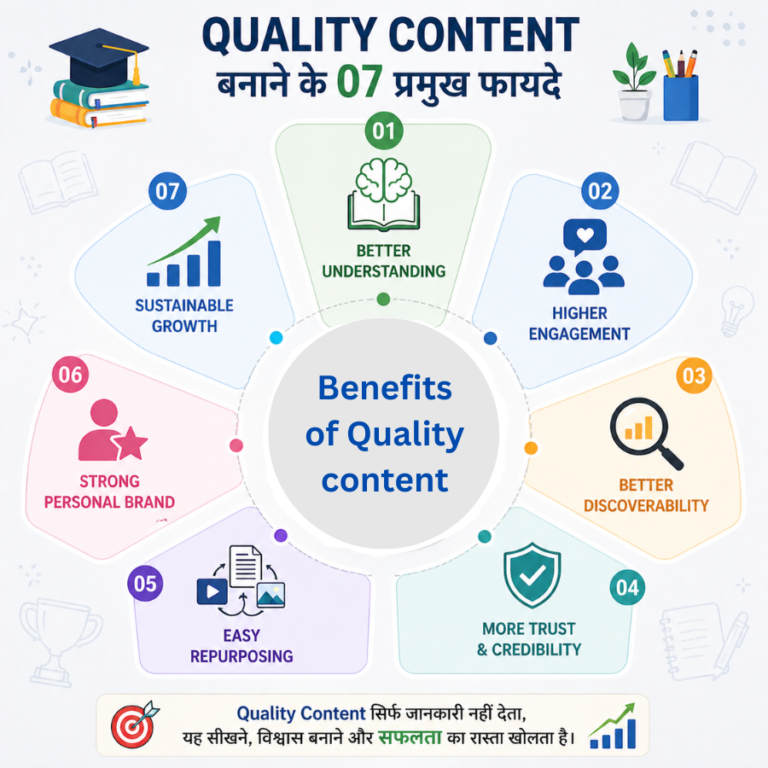
जब ऊपर की बातें सही ढंग से follow होती हैं, तो Quality Content केवल article नहीं रहता; वह एक ऐसा asset बन जाता है जो learning, trust, visibility और long-term growth—सबमें मदद करता है। नीचे 7 मुख्य फायदे दिए जा रहे हैं।
- Reader जल्दी और बेहतर समझता है:- Clear language, short sentences, active voice और scannable presentation cognitive load घटाते हैं। Plain-language principles और NN/G usability findings यही संकेत देती हैं कि concise और scan-friendly writing comprehension को मजबूत बनाती है। Student audience के लिए इसका मतलब है कि complex topic भी approachable लगता है।
- Content अधिक satisfying और engaging बनता है:- Google people-first evaluation में यह पूछा जाता है कि क्या reader topic समझकर जाएगा और क्या उसे satisfying experience मिलेगा। 2025 AI-search guidance page experience को भी critical बताती है। इसलिए quality-driven content अक्सर सिर्फ consume नहीं होता, बल्कि पूरा पढ़ा/देखा भी जाता है।
- Search visibility और click potential बेहतर होता है:- Clean title links, relevant snippets, descriptive anchor text, context-rich images और understandable page structure से content को users और search systems दोनों बेहतर समझते हैं। इसलिए अच्छे content के find होने और चुने जाने की संभावना बढ़ती है।
- Trust और authority build होती है:- जब author स्पष्ट हो, process transparent हो, claims verified हों और tone honest हो, तो content authority build करता है। Google trust को E-E-A-T का सबसे important हिस्सा मानता है, और Edelman रिपोर्ट information ecosystem में trust की ज्यादा अहमियत दिखाती है। यही कारण है कि अच्छा educational content बार-बार recommend और refer किया जाता है।
- एक ही idea को कई formats में reuse करना आसान हो जाता है:- अच्छा core article बाद में reel script, carousel, PDF checklist, webinar outline, audio note और email summary में बदला जा सकता है। Current format trends—video, webinars, audio, short-form video—इसी repurposing mindset को practical बनाते हैं। इसलिए Quality Content आपके effort का multiplier बनता है।
- Personal brand और proof of work मजबूत होता है:- जब कोई student लगातार niche-based, useful और well-structured content publish करता है, तो वह अपने नाम के साथ expertise associate करना शुरू करता है। Google की authorship-oriented guidance भी creator visibility को trust से जोड़ती है। व्यावहारिक रूप से, यही content आगे चलकर portfolio, credibility signal, या expertise showcase की तरह काम कर सकता है।
- Long-term sustainable growth मिलती है:- Search-engine-first content trend chase करता है; people-first content लंबे समय तक value देता है। Google की helpful-content guidance, anti-keyword-stuffing policy और promotion advice से यही समझ आता है कि genuinely helpful resource समय के साथ discover, share और revisit होता रहता है। यही sustainable digital growth है।
निष्कर्ष (Conclusion )
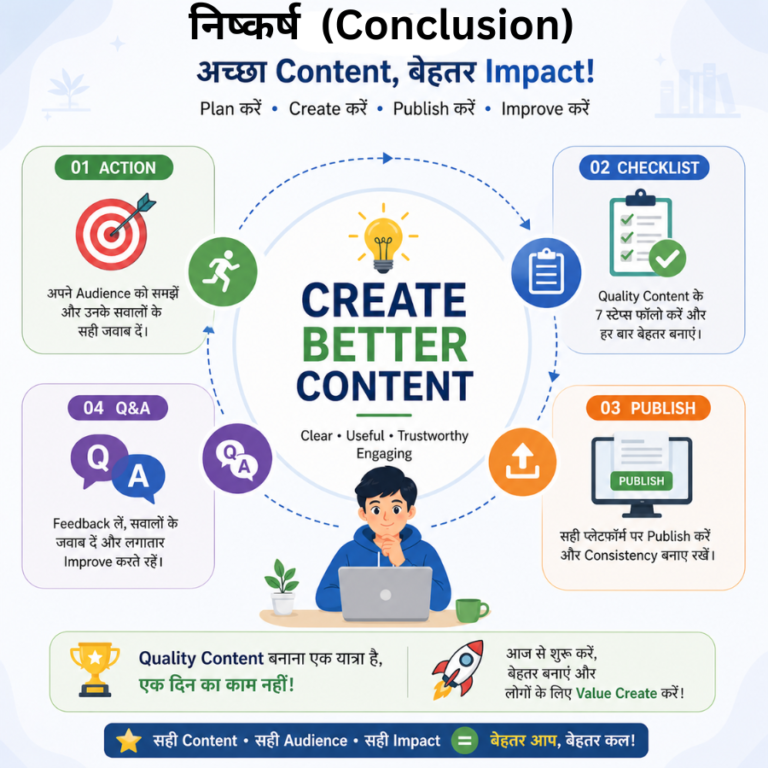
अंत में, Quality Content content की quantity का upgrade नहीं, बल्कि purpose का upgrade है। यह वही content है जो लोगों की मदद करे, search को manipulate न करे, trust बनाए, originality दिखाए, और reader को topic बेहतर समझाकर छोड़े। AI era, multi-platform attention, visual search और misinformation के समय में quality ही आपकी real differentiation है। यही कारण है कि चाहे आप student हों, beginner creator हों, या future freelancer—Quality Content आपकी सबसे valuable digital skill बन सकती है।
FAQ (अक्सर पूछे जाने वाले प्रश्न )
- क्या Quality Content सिर्फ लंबा article होता है?
नहीं। Google खुद कहता है कि उसका कोई preferred word count नहीं है। Length तभी useful है जब वह depth और value बढ़ाए; वरना short content भी high quality हो सकता है, अगर वह user intent को effectively fulfill करे। - क्या short-form video या reel भी Quality Content हो सकती है?
बिल्कुल। Search systems images, videos और दूसरे public materials को समझते हैं, और current marketing trend data short-form video को एक top media format दिखाता है। इसलिए format छोटा हो सकता है, पर value high होनी चाहिए। - क्या AI tools से लिखा content rank कर सकता है?
हाँ, यदि वह helpful, people-first और properly reviewed हो। Google की guidance के अनुसार AI-assisted content हो या human-written, evaluation “Who, How, Why” और overall helpfulness के आधार पर होना चाहिए। Human fact-check और editing बहुत जरूरी है। - क्या keyword density का कोई exact percentage rule होता है?
नहीं। Google meta keywords tag use नहीं करता, और excessive repetition को keyword stuffing माना जा सकता है। इसलिए exact percentage के बजाय natural, contextual keyword use पर ध्यान दें। - क्या image ALT text जरूरी है?
हाँ। Google के अनुसार alt text image और content के relationship को समझाने में मदद करता है, और W3C के अनुसार alt text image के purpose और information को convey करना चाहिए। यह SEO और accessibility दोनों के लिए महत्वपूर्ण है। - क्या student बिना अपनी website के भी Quality Content creator बन सकता है?
हाँ। Quality principles केवल website blog तक सीमित नहीं हैं। Article, video, infographic, PDF notes, audio summary—सब पर वही rules लागू होते हैं: usefulness, clarity, originality और trust। - Publish करने से पहले final quick-check क्या होना चाहिए?
सात बातें check करें: audience clear है या नहीं, content original है या नहीं, facts verified हैं या नहीं, structure scan-friendly है या नहीं, title/meta relevant हैं या नहीं, links natural हैं या नहीं, और visuals के साथ ALT text/context सही है या नहीं। यही mini quality audit आपकी post को average से strong बना सकता है।आज ही अपना अगला content idea उठाइए—चाहे वह notes-based blog हो, educational reel हो, project explanation हो, या study checklist—और इस 7-point framework पर उसे test कीजिए। खुद से पूछिए: क्या यह useful है? क्या यह clear है? क्या यह original है? क्या यह trustworthy है? अगर जवाब “हाँ” की दिशा में है, तो आप सिर्फ content नहीं बना रहे—आप Quality Content बना रहे हैं।
आज ही अपना अगला content idea उठाइए—चाहे वह notes-based blog हो, educational reel हो, project explanation हो, या study checklist—और इस 7-point framework पर उसे test कीजिए। खुद से पूछिए: क्या यह useful है? क्या यह clear है? क्या यह original है? क्या यह trustworthy है? अगर जवाब “हाँ” की दिशा में है, तो आप सिर्फ content नहीं बना रहे—आप Quality Content बना रहे हैं।
Digital Marketing सीखकर ऑनलाइन कमाई शुरू करें युवा
FREE में पूरी जानकारी पाने के लिए यहाँ क्लिक करें: https://vishalanuragi.in/blog